
🇸🇬 2025 Government-Funded Dental Implant Support in Singapore: Practical Strategies to Reduce Costs
Dental implants in Singapore can be expensive, but residents have access to several government-supported schemes, public healthcare pathways, and financial tools that can significantly reduce the overall cost—especially for the surgical component and pre-implant treatments.
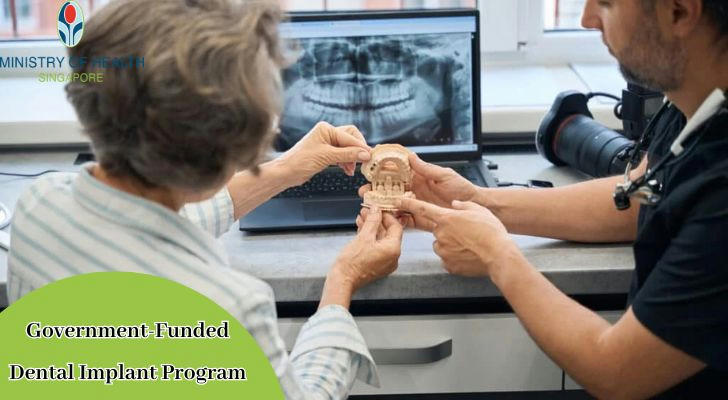
While implants themselves are not fully subsidised, there are realistic ways to lower expenses through a combination of subsidies, MediSave usage, and public healthcare services.
✅ 1️⃣ MOH Dental Subsidy Schemes
CHAS (Community Health Assist Scheme)
Eligible Singapore Citizens (based on household income or Annual Value criteria) can receive subsidies for:
- Dental consultations
- X-rays
- Tooth extractions
- Gum treatment
📌 Note: CHAS does not directly subsidise the implant crown or implant device, but it can reduce the cost of essential pre-implant treatments, which lowers the total treatment burden.
This matters because healthy gums and proper preparation reduce complications and future costs.
MediSave
For implants, MediSave is the most impactful financial tool.
You can use MediSave for:
- Surgical implant placement
- Bone graft procedures (if required)
Claimable amounts typically range from:
💰 $250 – $2,850, depending on complexity.
Important reminders:
- Claims apply only to the surgical component
- The clinic must be MediSave-accredited
- Patients should confirm eligibility before treatment
✅ 2️⃣ Public Hospitals and Subsidised Dental Centres
With a polyclinic referral, patients can access subsidised services at:
- National Dental Centre Singapore (NDCS)
- Khoo Teck Puat Hospital
- Ng Teng Fong General Hospital
Benefits include:
- Lower consultation fees
- Reduced diagnostic imaging costs
- Ability to use MediSave for implant surgery
Public institutions offer transparent pricing and structured care, which is especially important for patients managing long-term oral health.
✅ 3️⃣ CHAS-Accredited Private Clinics
Advantages:
- Convenient locations near residential areas
- Subsidies apply to pre-implant treatments
- Useful for patients needing multiple visits
This helps reduce the front-end cost before the implant procedure itself—especially gum treatment, cleaning, and extractions.
✅ 4️⃣ Community and Non-Profit Support
Target groups:
- Low-income families
- Seniors
- Vulnerable groups
Support may include:
- Basic dental check-ups
- Gum treatment
- Denture support
Although full implant funding is rare, these programs reduce overall dental care expenses, making it easier to maintain oral health before considering implants.
✅ 5️⃣ Workplace and Union Benefits (Often Overlooked)
Some employers and unions offer:
- Dental reimbursement
- Co-payment support
- Insurance coverage for oral surgery
In certain cases, benefits can be combined with MediSave, further reducing out-of-pocket costs.
Employees should:
✅ Check HR policies
✅ Review insurance terms
✅ Confirm eligibility for surgical reimbursement
✅ 6️⃣ Age-Based Support Strategies
Ages 45–54
Common need: tooth loss from gum disease Recommended approach:
- Use CHAS for gum treatment
- Use MediSave for implant surgery
Ages 55–64
Planning for long-term health costs Best option:
- Public system referrals for subsidised diagnostic care
Ages 65–74
More likely to qualify for enhanced subsidies Strategy:
- Utilize CHAS Blue or Merdeka Generation benefits
- Assess implant necessity with a specialist
Ages 75–85
Safety and suitability take priority Alternatives:
- Dentures
- Non-surgical oral management
Implants may not be recommended if medical risks are high.
✅ 7️⃣ Real Case Example
A 62-year-old Singapore resident:
- Obtained a polyclinic referral
- Received subsidised consultation at NDCS
- Used $950 MediSave for implant surgery
- Reduced gum treatment costs through CHAS
Outcome: Significantly lower total expenditure compared to private self-funded treatment.
✅ Conclusion
In Singapore, reducing implant-related costs is possible through a combined approach:
✔ CHAS for pre-implant treatment
✔ MediSave for surgical fees
✔ Public hospitals for subsidised consultations
✔ Community and workplace programs as additional support
The key is not just asking, “Is there a subsidy?” but knowing how to combine available support effectively.
If you need help with:
- Finding CHAS clinics
- Understanding MediSave claim rules
- Referral steps for public treatment