
Government-Supported Public Housing Assistance: Official Federal Program Overview
Public Housing is a government-supported federal housing assistance program administered by the U.S. Department of Housing and Urban Development (HUD). Through official federal funding and cooperation with local housing agencies, the program provides safe, decent, and affordable rental housing to eligible low-income families, older adults, and individuals with disabilities.
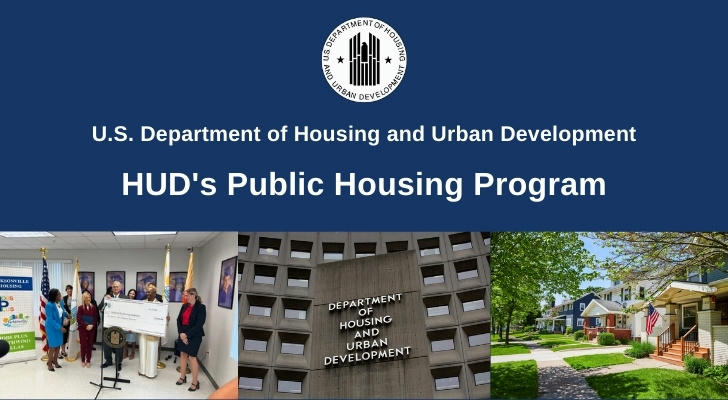
1. What Is Public Housing?
Public Housing consists of rental homes funded at the federal level and operated by approximately 3,300 local Public Housing Agencies (PHAs). These housing units range from scattered single-family homes to high-rise apartments designated for elderly residents.
HUD provides federal financial assistance and technical oversight, while local housing agencies are responsible for day-to-day management and compliance with federal requirements.
Nationwide, approximately 970,000 households reside in public housing units under this government-supported framework.
2. Who Is Eligible for Government-Supported Public Housing?
Eligibility is determined by the local housing agency in accordance with HUD regulations. Three primary criteria apply:
• Income Limits
Annual gross income must fall within HUD-established limits. These limits are based on a percentage of the area median income (AMI) for the county or metropolitan area.
HUD defines:
- Low-income: at or below 80% of AMI
- Very low-income: at or below 50% of AMI
Income limits vary by location.
• Family Status
Applicants must qualify as a family, an elderly person, or a person with a disability under HUD definitions.
• Citizenship or Eligible Immigration Status
Applicants must be U.S. citizens or have eligible immigration status as defined by federal regulation.
Local housing agencies also conduct background checks to ensure applicants will comply with lease requirements and maintain community standards.
3. Public Housing by Age Group
Although eligibility is income-based, public housing serves individuals and families across different age groups:
Children and Dependent Family Members
Families with minor children may qualify for housing stability that supports educational continuity and community integration. Local agencies may establish preferences to prioritize families facing urgent housing needs.
Working-Age Adults (18–61)
Working-age households often rely on public housing to reduce rent burden and stabilize housing costs. Income, employment status, and household composition are evaluated during the eligibility review process.
Annual income reexaminations ensure rent contributions reflect current financial circumstances.
Older Adults (62 and Older)
Individuals aged 62 or older are explicitly recognized under HUD guidelines as eligible elderly households.
Public housing for older adults may include buildings specifically designated for seniors. Additionally, elderly households may qualify for income deductions during rent calculation, which can reduce monthly housing costs.
Some local housing agencies may also coordinate supportive services for senior residents.

4. How to Apply
Applications must be submitted directly to a local Public Housing Agency.
The standard process includes:
- Submitting a written application with household details
- Providing documentation (such as birth certificates, tax records, or income verification)
- Authorization for income and background verification
- Placement on a waiting list if determined eligible
Due to demand exceeding supply, many housing agencies maintain waiting lists. Agencies may establish local preferences to prioritize households with the greatest need. In some cases, waiting lists may temporarily close.
5. How Rent Is Determined
In public housing, tenant rent is referred to as the Total Tenant Payment (TTP).
Rent is generally based on the highest of the following amounts:
- 30% of monthly adjusted income
- 10% of monthly gross income
- Welfare rent (if applicable)
- A minimum rent (not less than $25, as established by HUD or the local agency)
Certain deductions may apply before calculating adjusted income, including:
- $480 per dependent
- $400 for elderly or disabled households
- Certain medical expenses for elderly or disabled households
Rent determinations are conducted in accordance with federal regulations and subject to periodic review.
6. Role of Local Housing Agencies
Local Public Housing Agencies operate the housing units under HUD oversight. Their responsibilities include:
- Executing and enforcing leases
- Collecting rent
- Conducting annual income reviews
- Maintaining housing safety and sanitary standards
- Managing transfers when necessary
While HUD provides funding and regulatory guidance, local agencies administer operations in compliance with federal requirements.
Conclusion
Public Housing is a federally supported and officially administered housing assistance program designed to ensure access to safe and affordable housing for low-income households, older adults, and individuals with disabilities.
Through formal cooperation between HUD and local Public Housing Agencies, the program establishes clear eligibility standards, structured rent calculations, and regulated administrative procedures to provide long-term housing stability across age groups.
For location-specific eligibility and application details, individuals must contact their local Public Housing Agency directly.